
Documenting
the Visual Arts
Home
About the Photographer
Photographic Services
Image usage
Scheduling a session
Contact
Indexed Historical Archive
Photographic Portfolio
Coins
Cosmetic containers
Gems
Diamonds
Intaglios
Pendants
Rings
Watches
Stamps
Copyright © 2011
Genevra Kornbluth.
Please see my policies on image usage.
Last updated
November 11, 2023
Historical Archive: Historical Rulers up to 350 CE
For rulers from biblical accounts, see Old Testament/Hebrew Bible in Jewish/Christian iconography index.
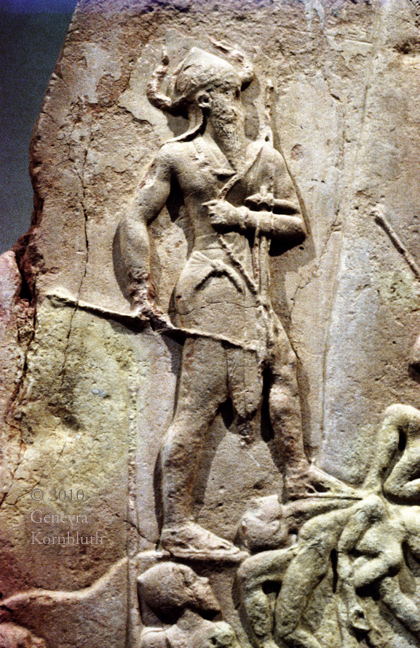
Stele of Naram-Sin, pink limestone, 2254-2218 BCE, Louvre. For additional views see Louvre. |
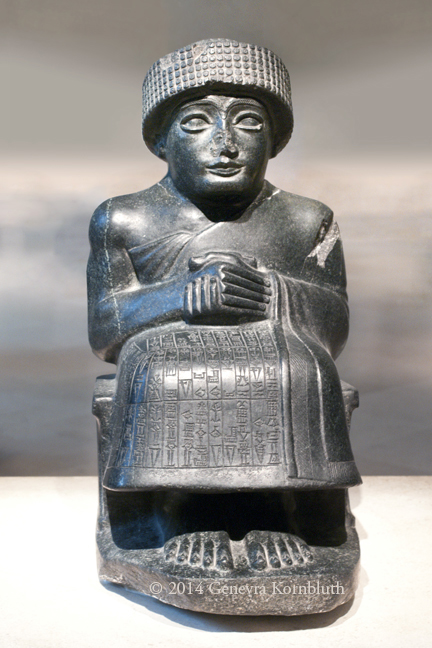
Gudea dedicated to Ningishzida from Tello (Girsu), diorite, c.2120 BCE, Louvre AO 3293, AO 4108. Gudea has his own page. |
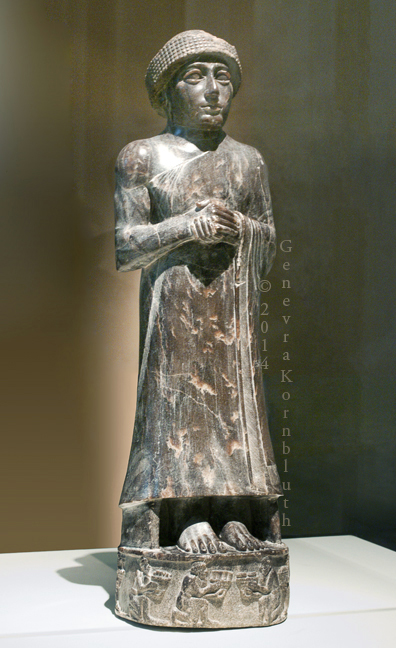
Ur-Ningirsu (son of Gudea), gypsiferous alabaster, c.2110 BCE, Tello (Girsu), Louvre AO 9504 and Met (head). This work has its own page. |
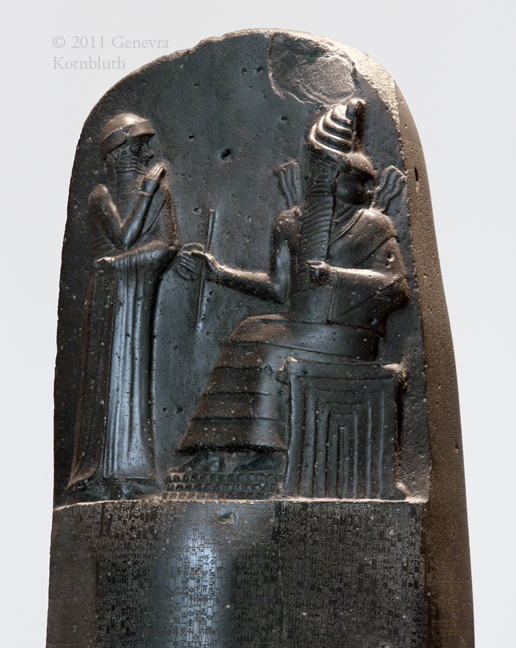
Code of Hammurabi, basalt, 1792-1750 BCE, Louvre, Near Eastern Antiquities, Sb 8. This work has its own page. |
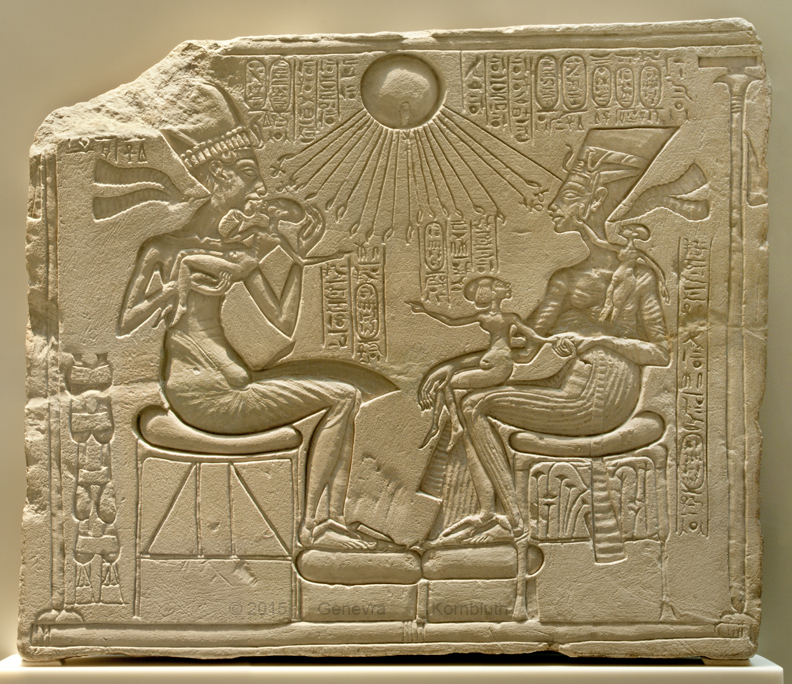
Akhenaten (reg. 1353/512–1336/34 BCE), Nefertiti, 3 daughters, limestone, c.1345 BCE, SMB EgMP ÄM 14145, which has its own page |

poss. Persian king Darius III Codomannus, d.330 BCE: Alexander casket, Byzantine ivory, prob. 12th c., poss. 6th or 9th c., Darmstadt Kg 54:215a-d, which has its own page |
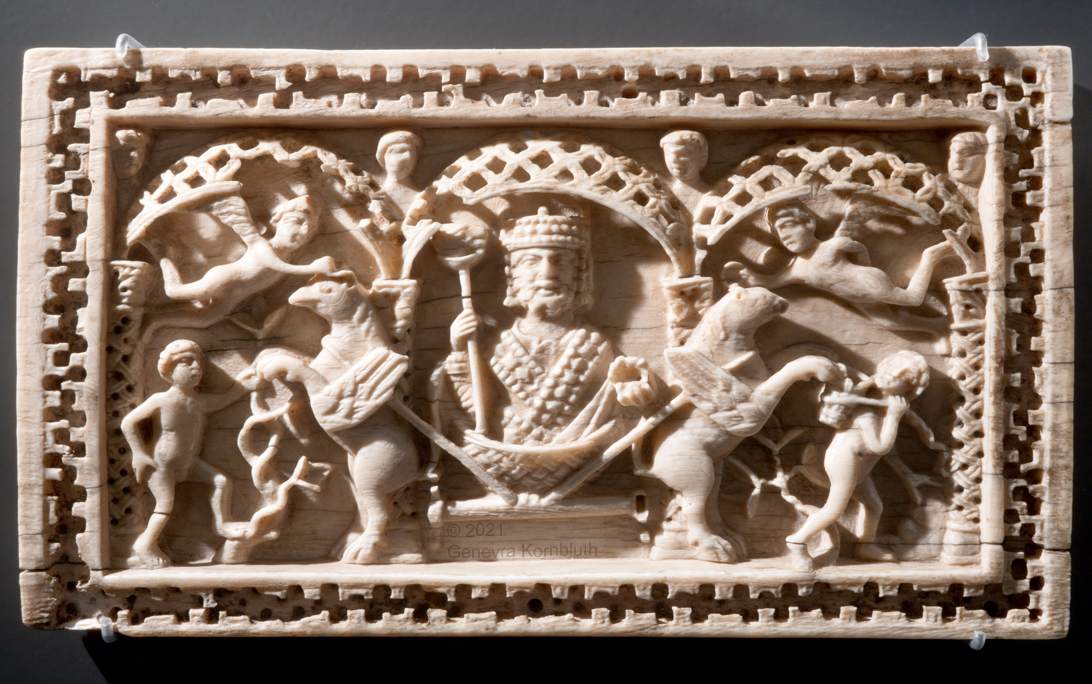
Alexander III of Macedonia (the Great, d.323 BCE): Alexander casket, Byzantine ivory, prob. 12th c., poss. 6th or 9th c., Darmstadt Kg 54:215a-d, which has its own page |
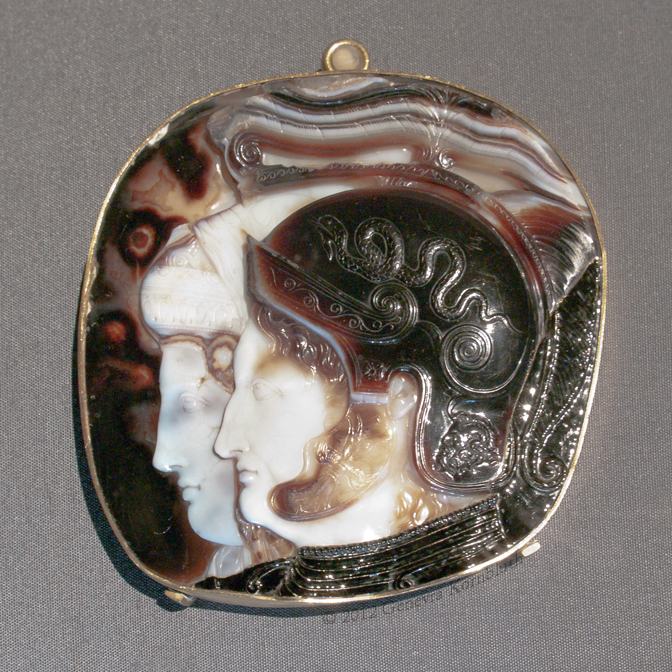
Ptolemy II Philadelphus and Arsinoë II (Vienna Gonzaga cameo), agate, 278-69 BCE, setting with enamel 1575-1600, KHM IXa 81 |
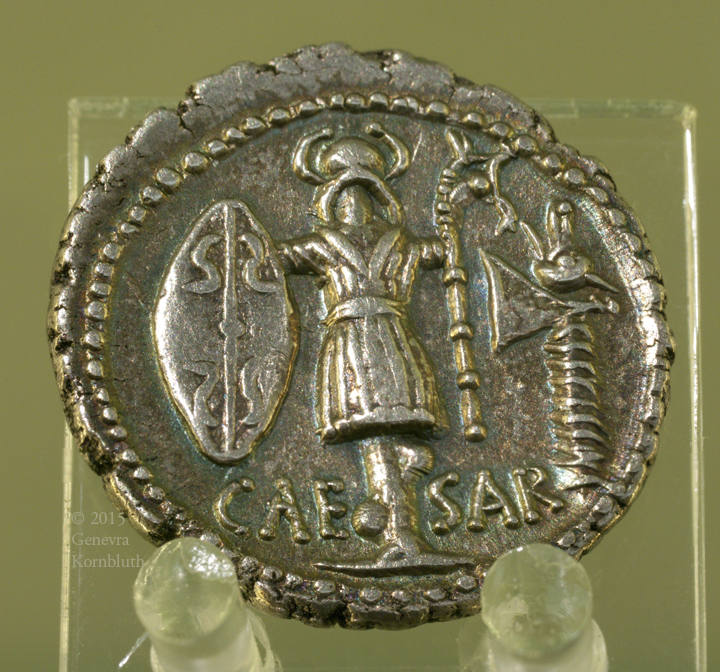
denarius of Julius Caesar, 48-47 BCE, MNW 219169 rev |
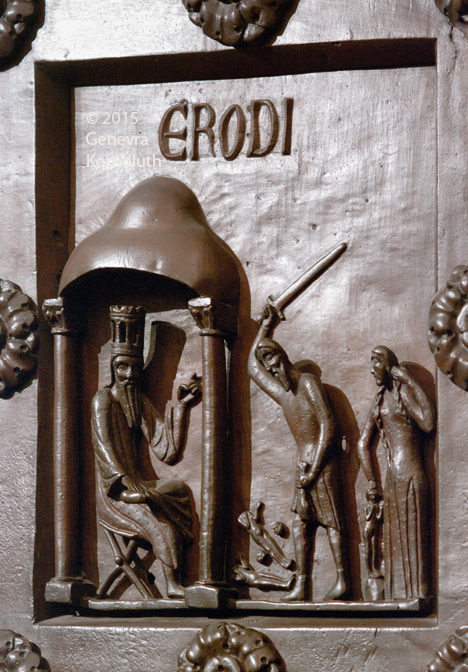
Herod the Great, reg. 37-4 BCE: Pisa Cathedral doors, bronze, Bonannus of Pisa c.1180. This work has its own page. For this Herod see Massacre of the Innocents. |
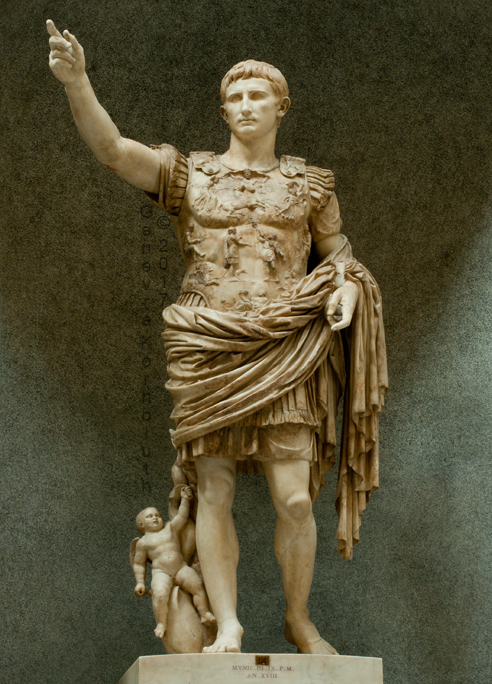
Augustus (63 BCE-14 CE) of Prima Porta, marble, early 1st c. CE, Vat MV.2290.0.0, which has its own page. Augustus has his own page. |

Herod II (27 BCE-33 CE) and Herodias (c.15 BCE-aft. 39 CE): Bernward Column, Hildesheim, c. 1020, bronze, which has its own page with another image |
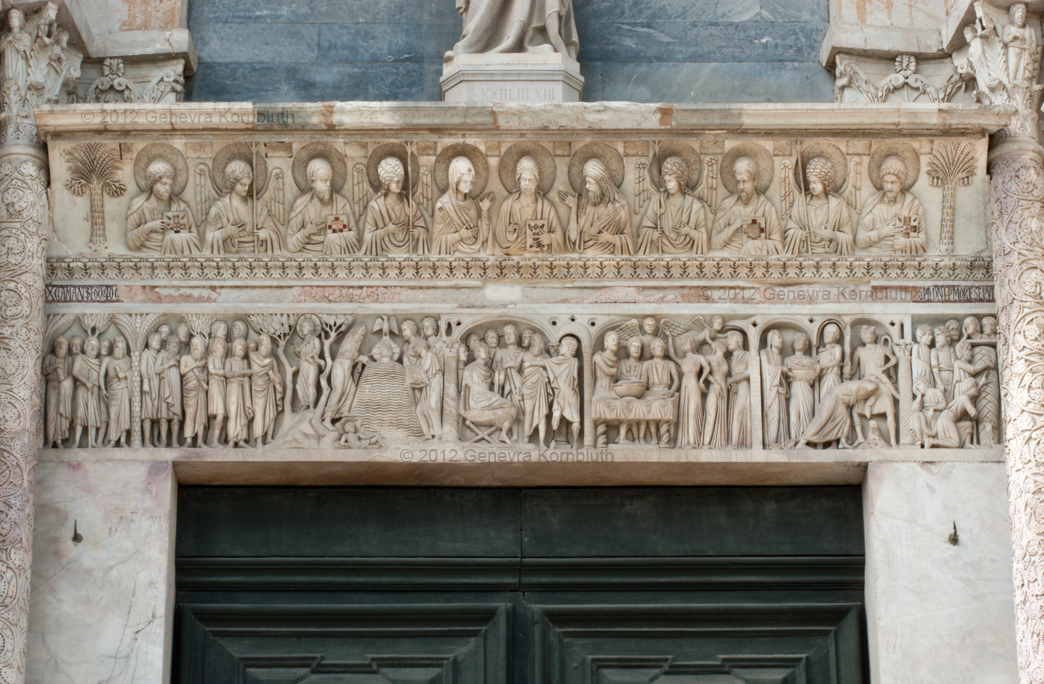
Herod II (27 BCE-33 CE) and Herodias (c.15 BCE-aft. 39 CE): lower architrave, early 13th c., Pisa baptistery, which has its own page, in cathedral complex |

Herod II (27 BCE-33 CE) and Herodias (c.15 BCE-aft. 39 CE) in Life of John, dome mosaic c.1240-1310, Baptistery of St. John, Florence. This work has its own pages. |
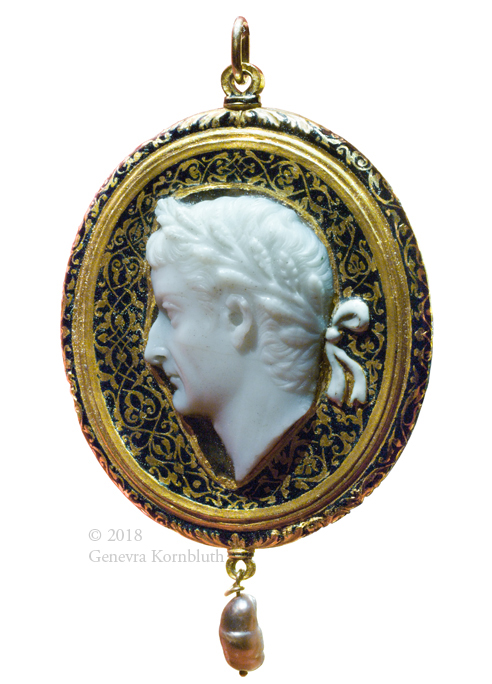
Emperor Tiberius (reg. 14-37 CE), agate cameo; frame France or Italy, early 16th c.: gold, enamel, pearl. AIC 1992.297 |

Tiberius, Germanicus, Augustus: Gemma Augustea, banded agate cameo, 9/10-12 CE, KHM ANSA IXa 79. This work has its own page. |
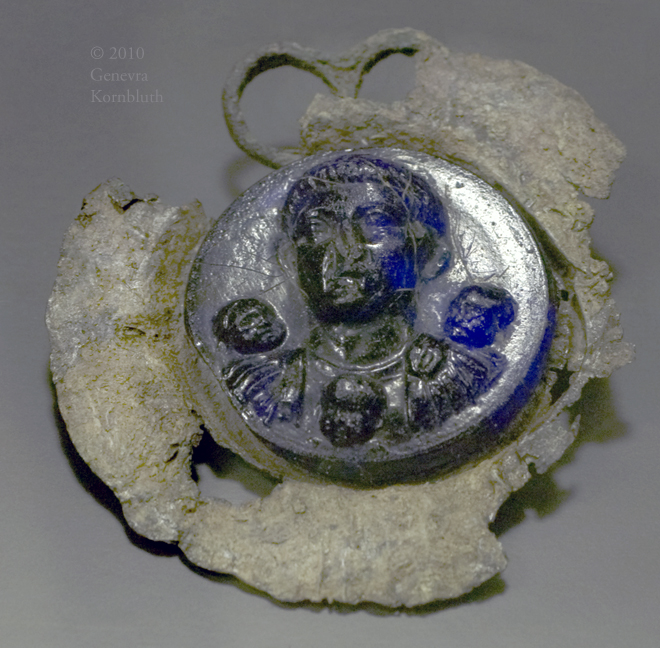
Germanicus? (d. 19 CE) with 3 children, phalera, molded glass cameo in metalwork mount, 1st c., HMP |
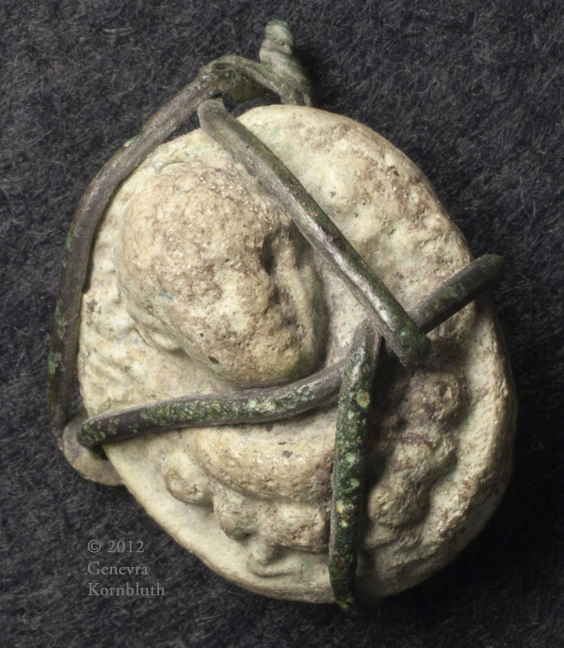
Germanicus? (d. 19 CE) glass cameo prob. 1st c. CE, in a Roman period bound pendant from Zethlingen, MVFg. This work has its own page. |
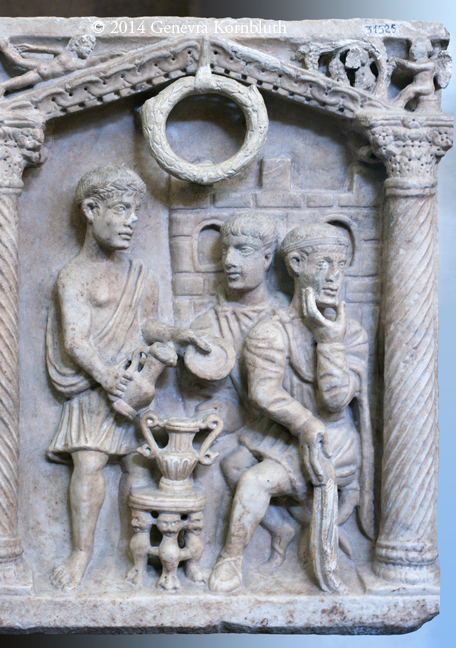
Pontius Pilate, Roman prefect 26-36 CE: Passion sarcophagus, marble, c.350 CE, Vat 31525. This work has its own page. Pilate has his own page. |
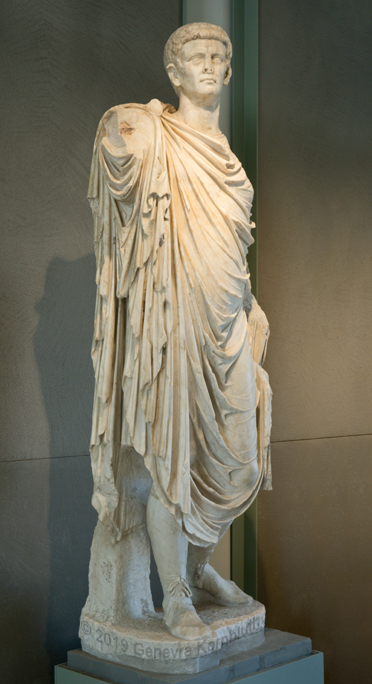
Emperor Claudius (reg. 41-54), marble, head 1st c., body poss. 2nd c., Marignane area, ANAM. For oblique view see ANAM. |
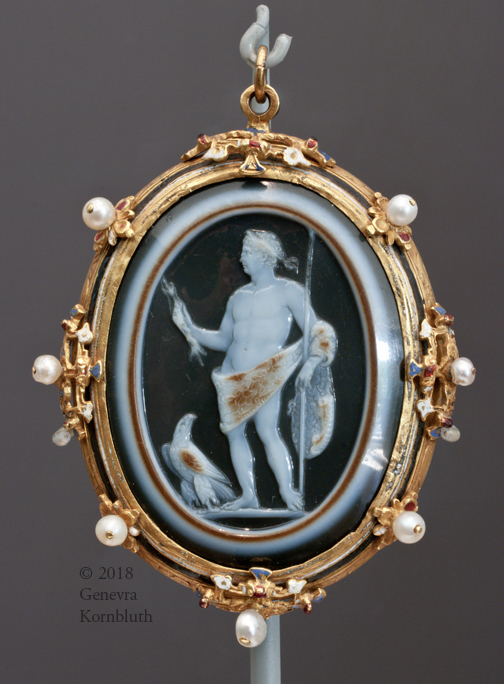
Emperor Claudius (reg. 41-54) as Jupiter, agate cameo; frame Italy, late 16th c.:gold, pearls, enamel. AIC 1991.375. For profile see AIC. |
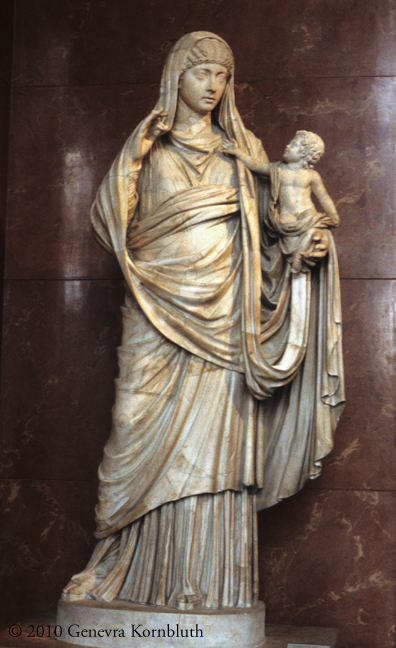
Messalina with the infant Britannicus from Rome, marble, c.45 CE, Louvre MR 280 |
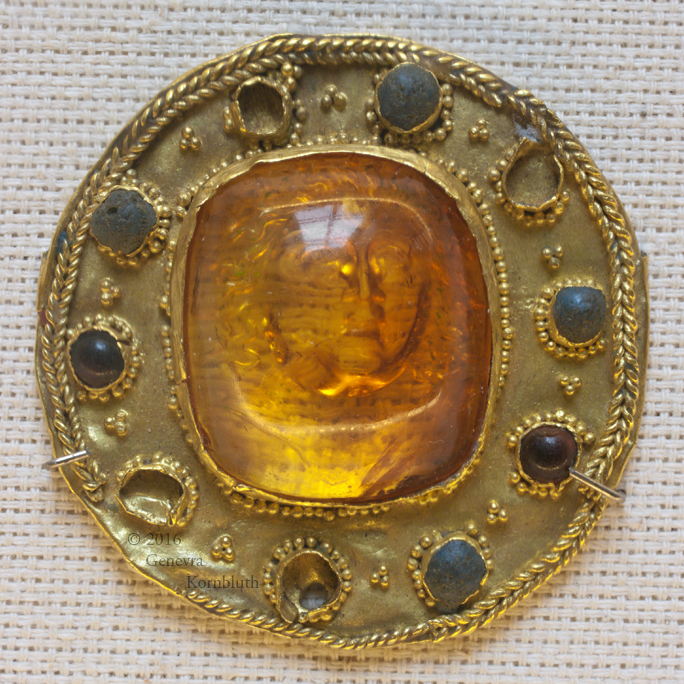
Nero (d. 68) as Helios, citrine intaglio in gold fibula with glass inserts, 1st-2nd. c., Hermitage ГP-21629 |

Nero (d. 68 CE): Stavelot altar, gilt bronze with enamel and rock crystal, c.1150-60, MRAH 1590. This work has its own page. |

Nero (d. 68 CE): Ambrogio Lorenzetti, Good and Bad Government 1338-40, Siena, which has its own page |
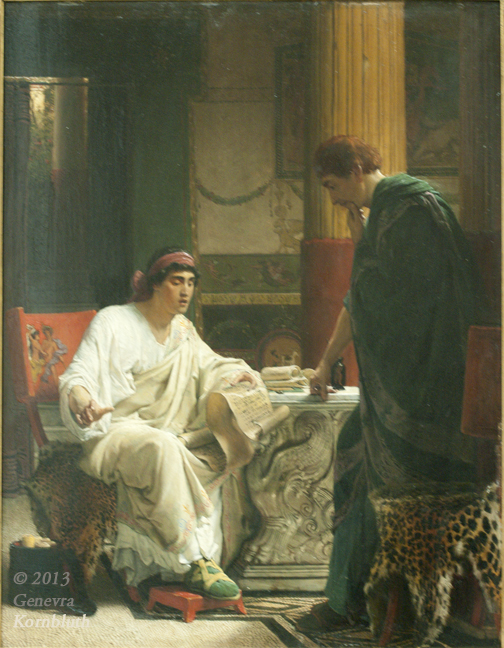
Vespasian (reg. 69-79) hearing of the taking of Jerusalem, Lawrence Alma-Tadema 1866, oil on panel in original frame, UMMA 2004/2.143. This work has its own page. |
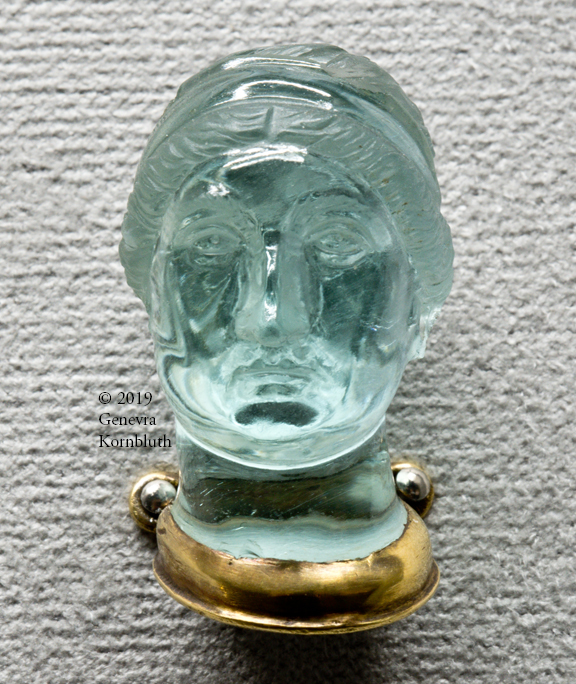
Empress, 2nd c., poss. Matidia (Augusta 112-19) or Sabina (Augusta fr. 119), aquamarine, Florence MA 14547 |
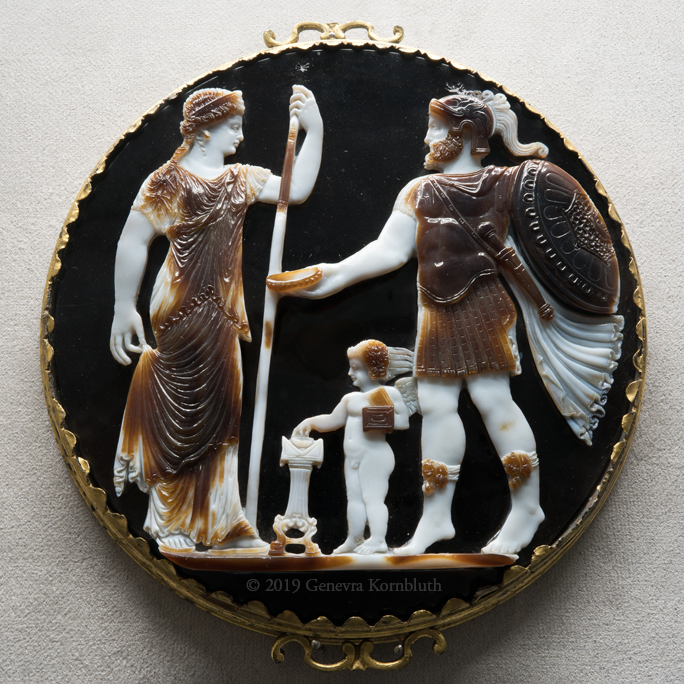
Medici cameo: emperor (Claudius Gothicus or *Antoninus Pius?) with genius, sacrificing poss. to Hope, 1st-3rd c., sardonyx cameo, Florence MA 14443. This work has its own page. |
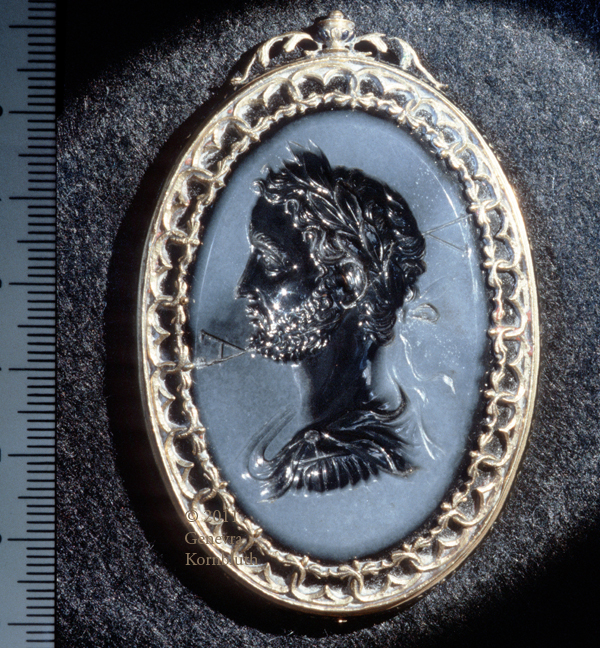
Antoninus Pius (131-68), Roman or 15th c. niccolo agate profile laureate intaglio in 16th c. gold mount, CdM Chab. 2093. For reverse see CdM. |
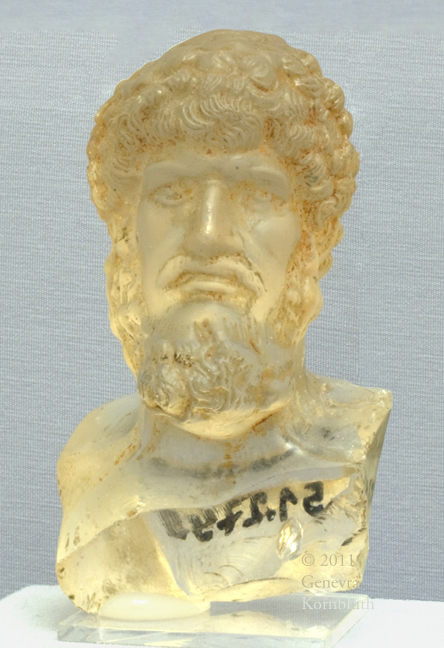
Lucius Verus (161-69 CE), cast glass, from Antalya (Turkey), possibly modern, MFAB. For profile view see see MFAB. |
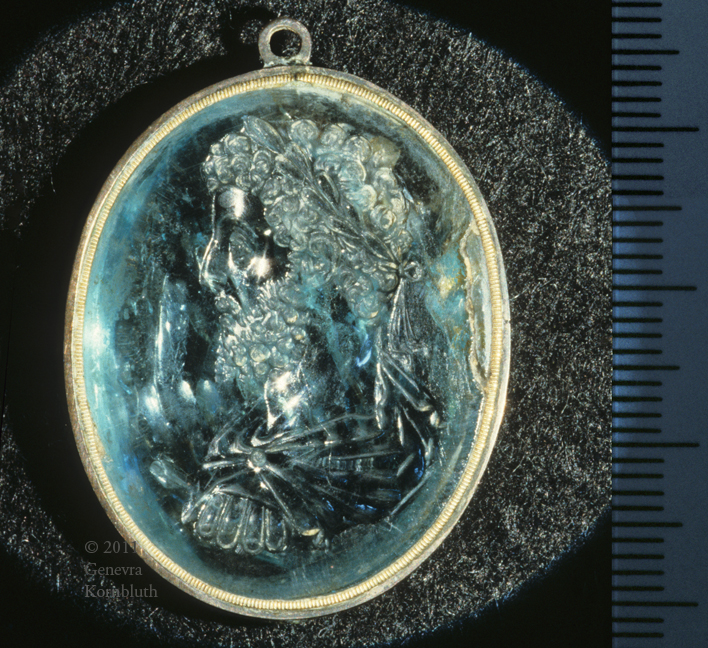
Commodus (161-92), Roman aquamarine profile laureate intaglio, CdM Chab. 2098 |
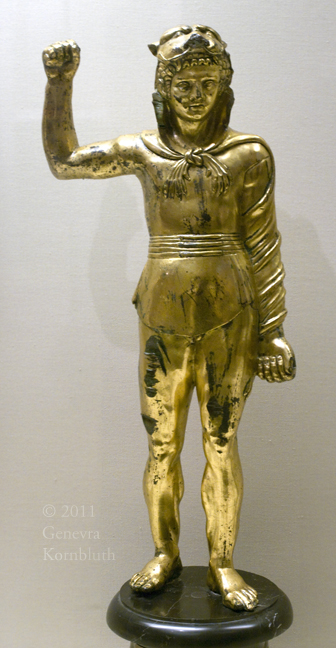
Commodus (?) as Hercules, gilded copper alloy, 2nd c., said to be from Hadrian's Wall, BM 1895,0408.1. For additional views see British Museum. |
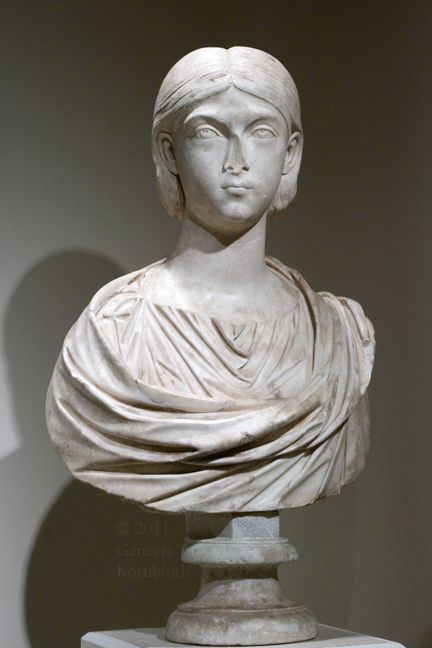
Roman lady, Empress Aquilia Severa?, marble, c.200-230, KM 1983.03.0001. For additional views see Kelsey Museum. |
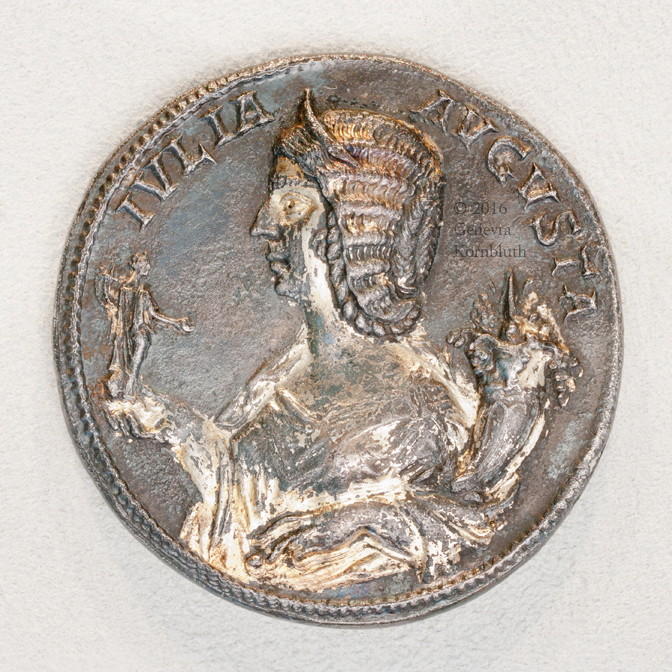
Iulia Domna, gilded silver, Rome 205-11, SMBMünz 8200788 |
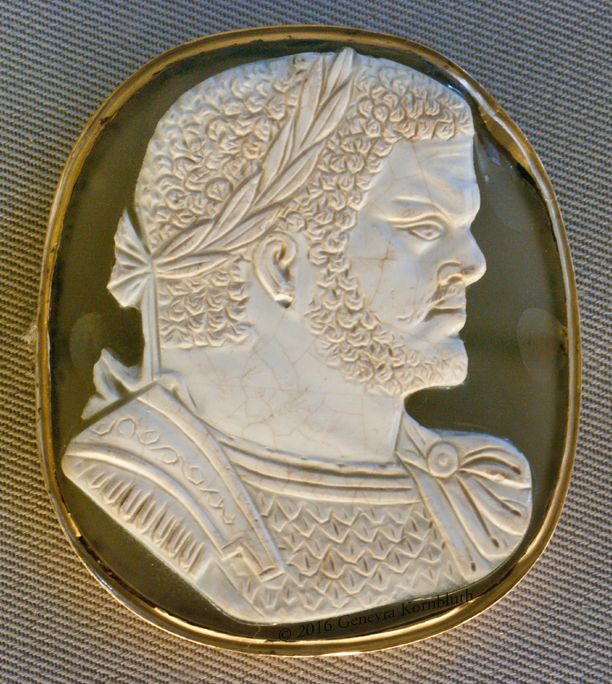
Caracalla (211-17), onyx cameo, 3rd c., Hermitage ГP-12732 |
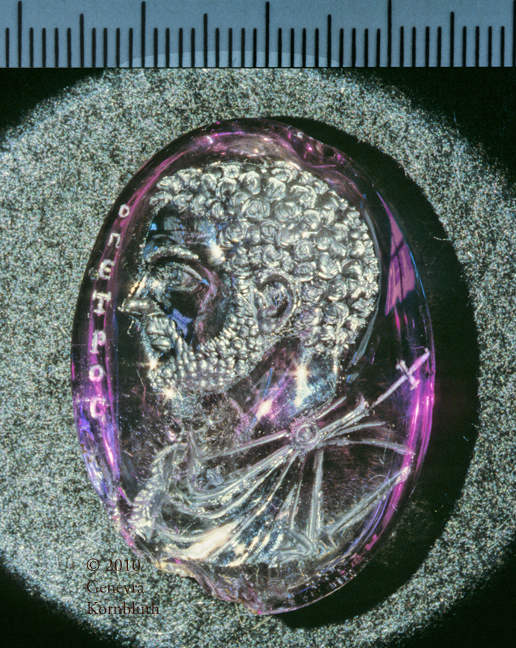
Caracalla (211-17), later inscribed O Petros, amethyst intaglio, Roman, CdM Chab. 2101 |
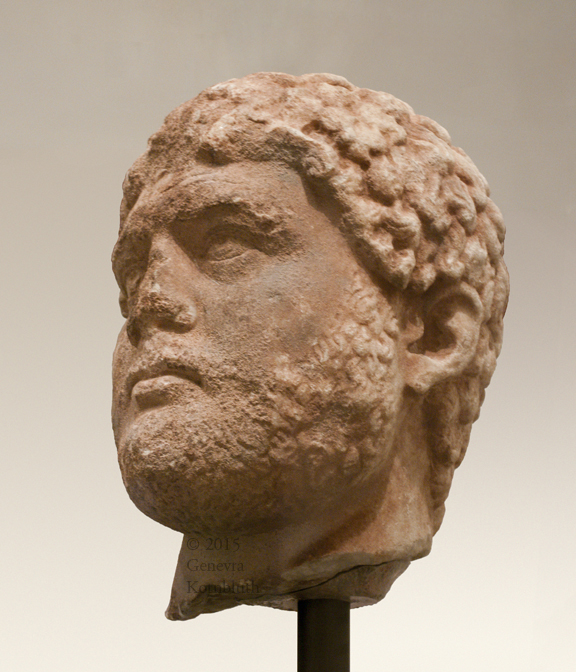
poss. Caracalla c.212-17, or c.130-60, head from Rumeli Hisar, Penn MS216, which has its own page |
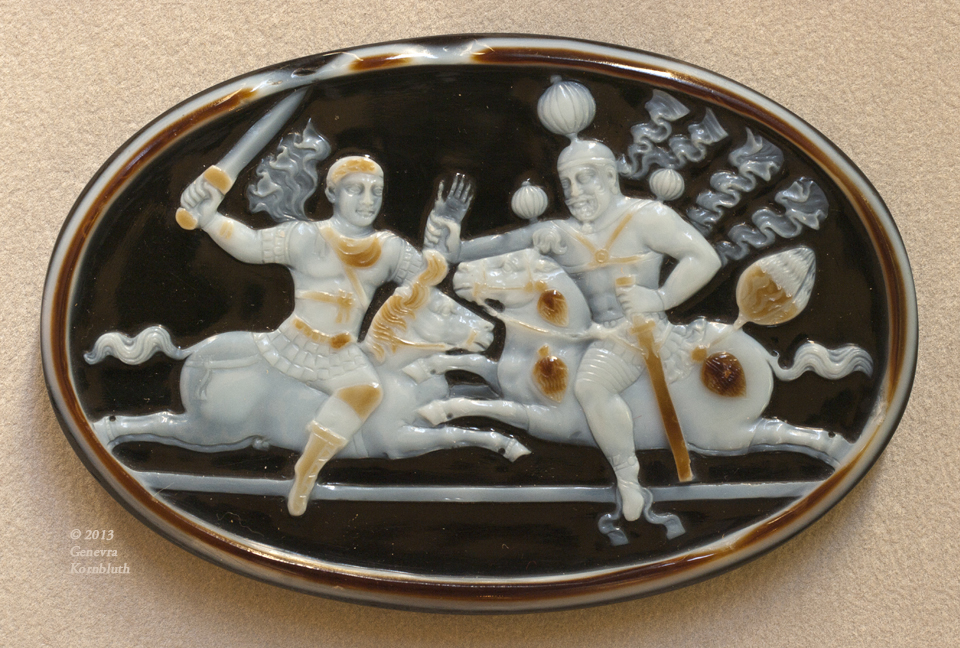
Valerian (253-60) captured by Shapur I (241-72), Sassanian sardonyx cameo, c. 260 CE, CdM Babelon 360 |
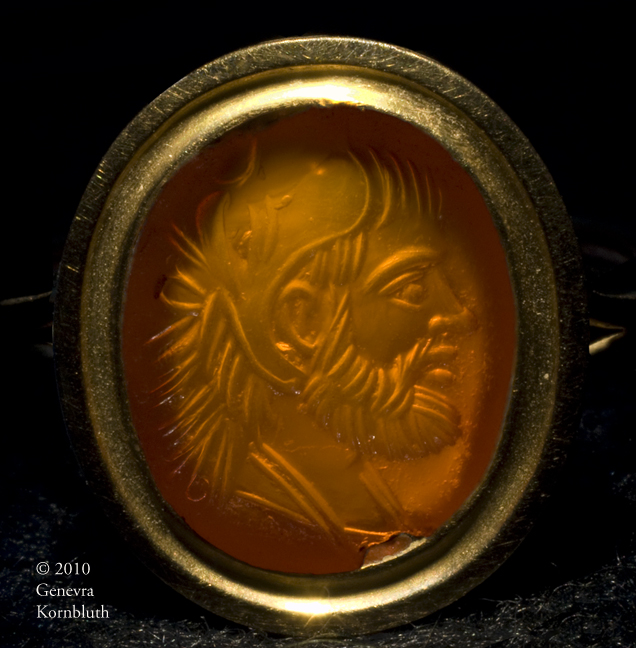
Claudius Gothicus (268-70) as Hercules, sard intaglio, BM 1867.5-7.322, Walters no. 2029. For additional views see British Museum. |

Medici cameo: emperor (*Claudius Gothicus or Antoninus Pius?) with genius, sacrificing poss. to Hope, 1st-3rd c., sardonyx cameo, Florence MA 14443. This work has its own page. |
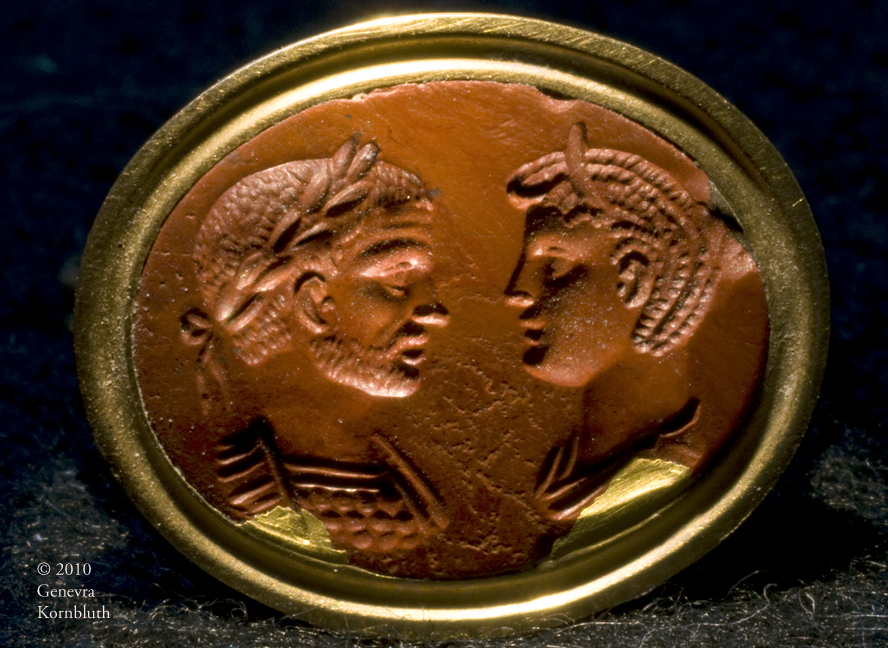
Aurelian (270-74) and Ulpia Severina, red jasper intaglio, BM 1867.5-7.7541, Walters no. 2031. For another view see British Museum. |
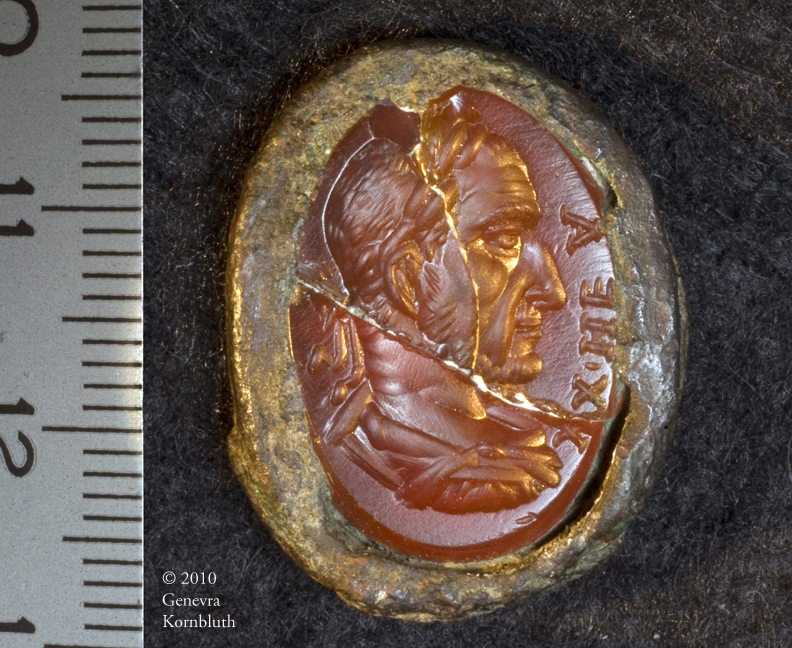
Decius (249-51) bust, sard intaglio, BM 1772.3-14.59, Walters no. 2028. For additional views see British Museum. |
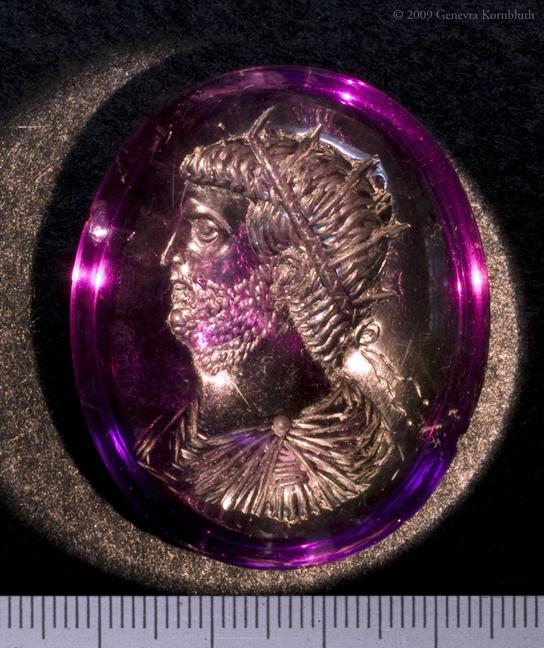
Gallienus (253-68), diademned bust, amethyst intaglio, BM 1925.7-15.3. For additional views see British Museum. |
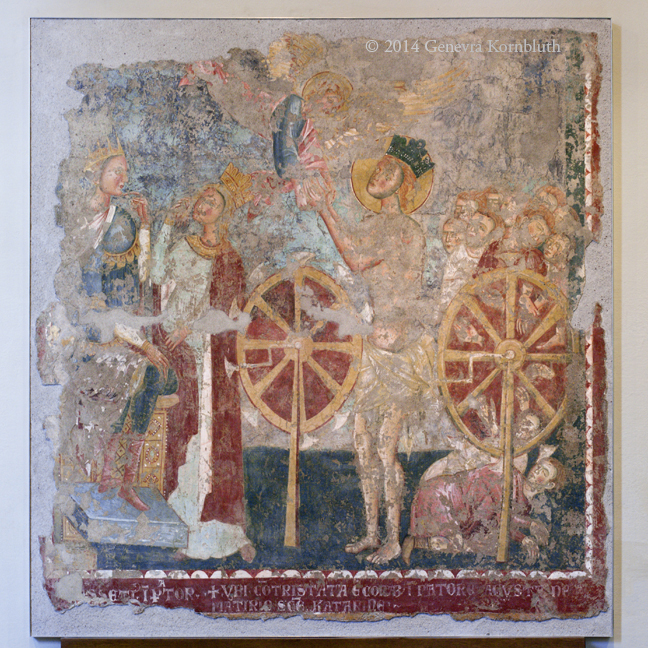
Emperor Maximian (c.250-310) or Maxentius (c.278-312) with St. Catherine of Alexandria, late 13th c. Rome, fresco from S. Agnese sulla via Nomentana, Vat 40478. For details see Vatican Museums. |
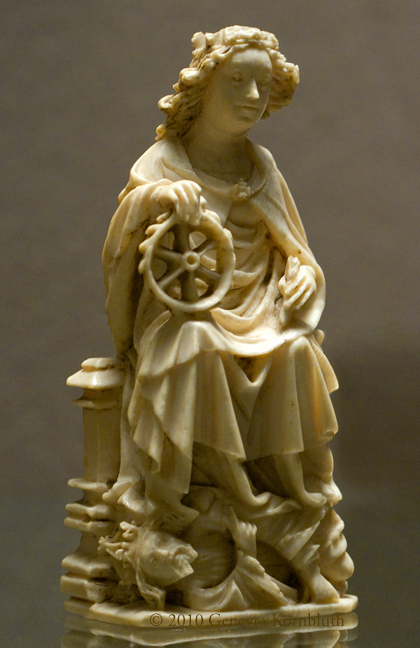
Emperor Maximian (c.250-310) or Maxentius (c.278-312) trampled by St Catherine, ivory, Rhineland c.1400, Louvre OA 3456. For frontal view see Louvre. |
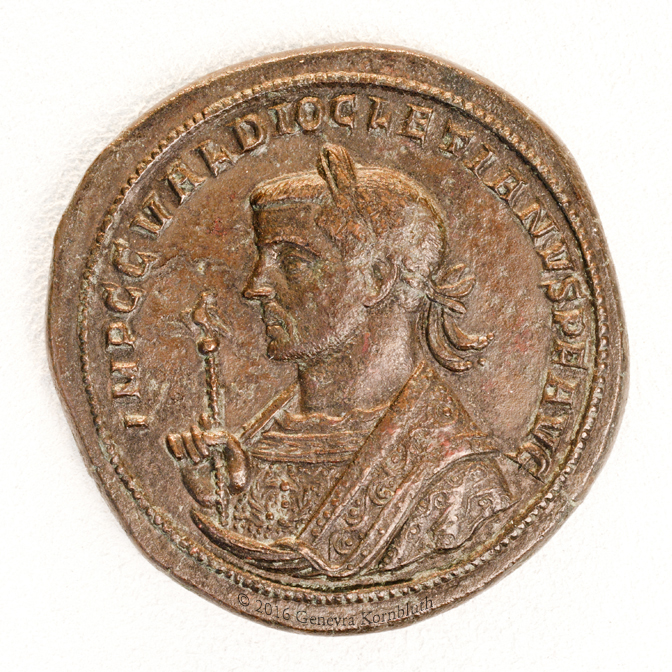
Diocletian as consul, bronze medallion, Rome c.294, SMBMünz 18200725 |
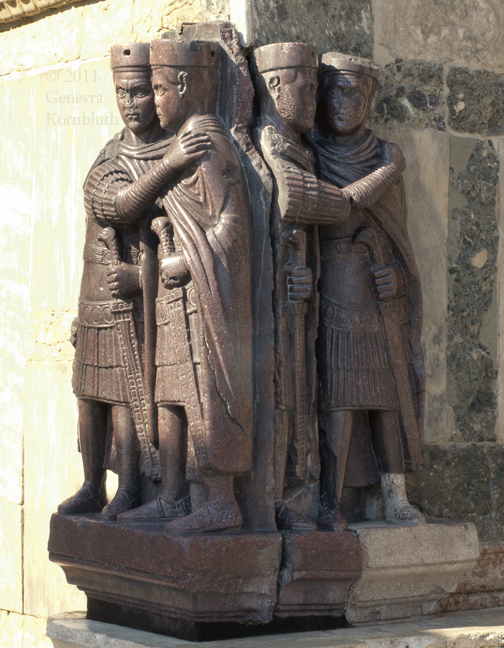
Tetrarchs: probably Diocletian, Maximilian, Valerian and Constantius Chlorus; porphyry, c.305, San Marco, Venice. This work has its own page. |

Empress Helena (c.248-328): Stavelot Triptych, Mosan, c.1156-58, Morgan AZ001, which has its own page. Helena has her own page. |
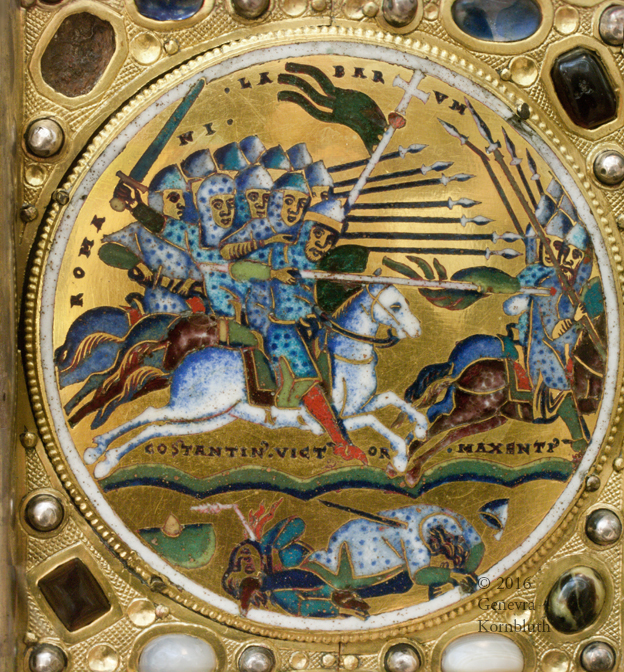
Emperor Maxentius (reg. c.278-312): Stavelot Triptych, Mosan, c.1156-58, Morgan AZ001, which has its own page. |

Emperor Galerius Maximianus (reg. 305-11): Reliquary of SS. Adrian and Natalia, León 12th c., silver on oak, AIC 1943.65. This work has its own page. |

Emperor Constantine I (reg. 306-37), Byzantine triptych, late 11th-early 12th c., on Stavelot Triptych, Morgan AZ001, which has its own page. Constantine has his own page. |
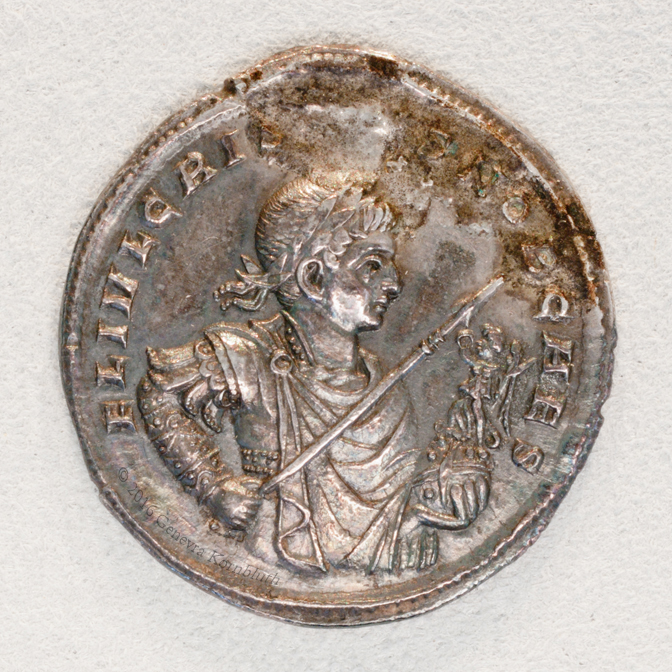
Crispus (Caesar, d.326): silver 2 siliquae of Constantinus I, Cologne 319, SMBMünz 18200817 |
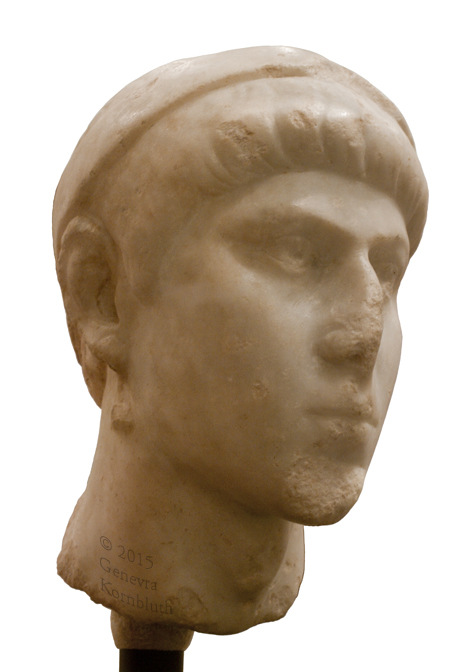
Constantius II? El Bab, Syria, c.335-61, Penn L-51-1, which has its own page |